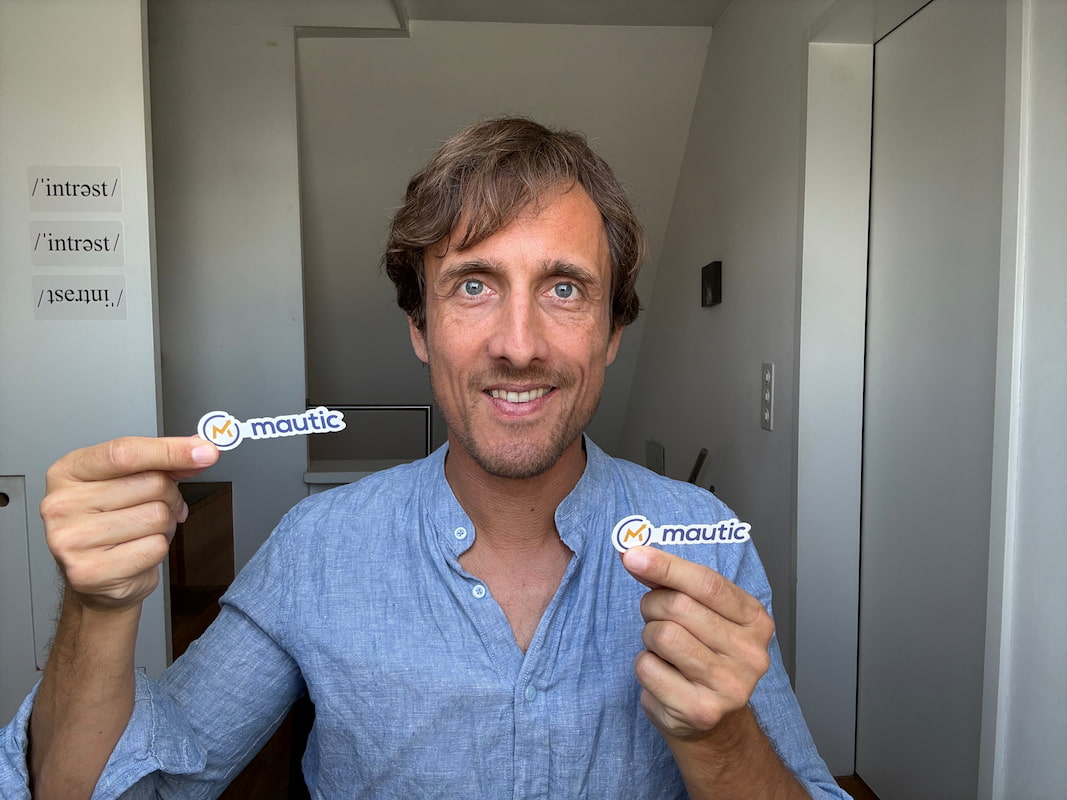
Nine years ago, I set up an open-source tool for the first time: Mautic. I was sitting at my computer at night working on it—alongside my day job. My goal: I wanted marketing automation that wouldn’t take control of my customer data out of my hands. Today, my entire company is built on it.
Time for an honest assessment: these are the five most important lessons I’ve taken away for myself over these nine years. And honestly: I wish I’d known them earlier.
How it all started
In 2017, I was co-founder and CTO of a small software startup. We had a good product, but no budget for expensive marketing suites. Above all, we had no desire to hand our customer data over to an American cloud provider.
While looking for a solution, I came across Mautic: the first open-source platform for marketing automation. It was launched in 2014 by David Hurley with the idea “made by the people, for the people.”
As someone who’s been developing software for more than two decades, one thing was clear to me: I want a tool I can customize and extend myself. That’s how Aivie came about: part of the Mautic community since 2019, a partner since 2020, and since 2025 I’ve been part of the Mautic Council.
Lesson 1: Email marketing is much more complicated than it looks
What I massively underestimated is how complex email marketing is. First, the tech: reliably getting an email into the inbox is anything but trivial. Deliverability, sender reputation, warmed-up sending IPs, correctly set up authentication with SPF, DKIM, and DMARC all matter. Most of it is invisible—until it doesn’t work properly.
What customers who have switched to Aivie say
We moved from HubSpot and now have lower costs, less effort and, with Aivie, a partner that doesn’t hide its services behind a paywall. We also appreciate the excellent support.
Daniel B.
IT
Both the tool and the service are excellent. I particularly appreciate the fast response and data security, as all data is stored in Switzerland. The prices are very reasonable. Would recommend this service to others!
We have been working with Aivie as a marketing automation service for years. It is the clear number one in the areas of marketing automation and marketing strategy, and also offers by far the best price-performance ratio!
Felix Caprez
CMO
Then there’s the legal side: consent, double opt-in, traceability, deletion concepts—with GDPR and revFADP, that’s not optional, it’s a basic requirement. And finally the hardest part: people. You can do everything right technically and legally. But if your recipients don’t see the value, even the best automation is useless. Relevance beats reach, every time.
Lesson 2: Data sovereignty used to be a niche. Today it’s a CEO-level topic
When I started arguing “your data belongs to you” in 2017, many people gave me a friendly smile. Today, that same question plays a central role in almost every first conversation—whether it’s coming from management, legal, or procurement.
The context has changed: the revised Swiss data protection law, GDPR, and a broad debate about digital sovereignty, where even authorities and armies are now questioning their cloud dependencies (the Swiss Army, for example, is increasingly relying on European software instead of Microsoft).
For us, data sovereignty means something very concrete: the data is stored encrypted on a Swiss server—if you want, entirely on Swiss infrastructure, in your own instance. You can find out more in the post on the new data protection law and on Mautic hosting.
Lesson 3: An honest price is one you understand
Over the years, I’ve seen countless tool invoices. What stuck with me: the problem is rarely the price level—it’s when you can no longer explain what you’re paying for. In marketing automation, there’s exactly one honest cost driver: the size of your database. Every active contact means storage, processing, and delivery. That’s why almost everyone charges by contacts—and so do we.
The difference isn’t whether you charge, but whether the price only goes up where real costs arise. For us, the per-contact price is a transparent proxy for infrastructure costs—no per-seat markup, no features hidden behind the next tier, no annual price hike. A price you can explain to your CFO in two minutes is worth more than a low entry price nobody can verify.
Lesson 4: Open Source isn’t free—it’s shared
At first, I thought open source mainly meant “free.” Wrong—it means “shared.” Mautic is supported by a global community of countless volunteer contributors and is used in tens of thousands of organizations. That breadth is the real protection: no single vendor can change the terms overnight, triple the price, or discontinue the product. But a community is not a self-serve buffet—if you only take, you’re sawing off the branch you’re sitting on.
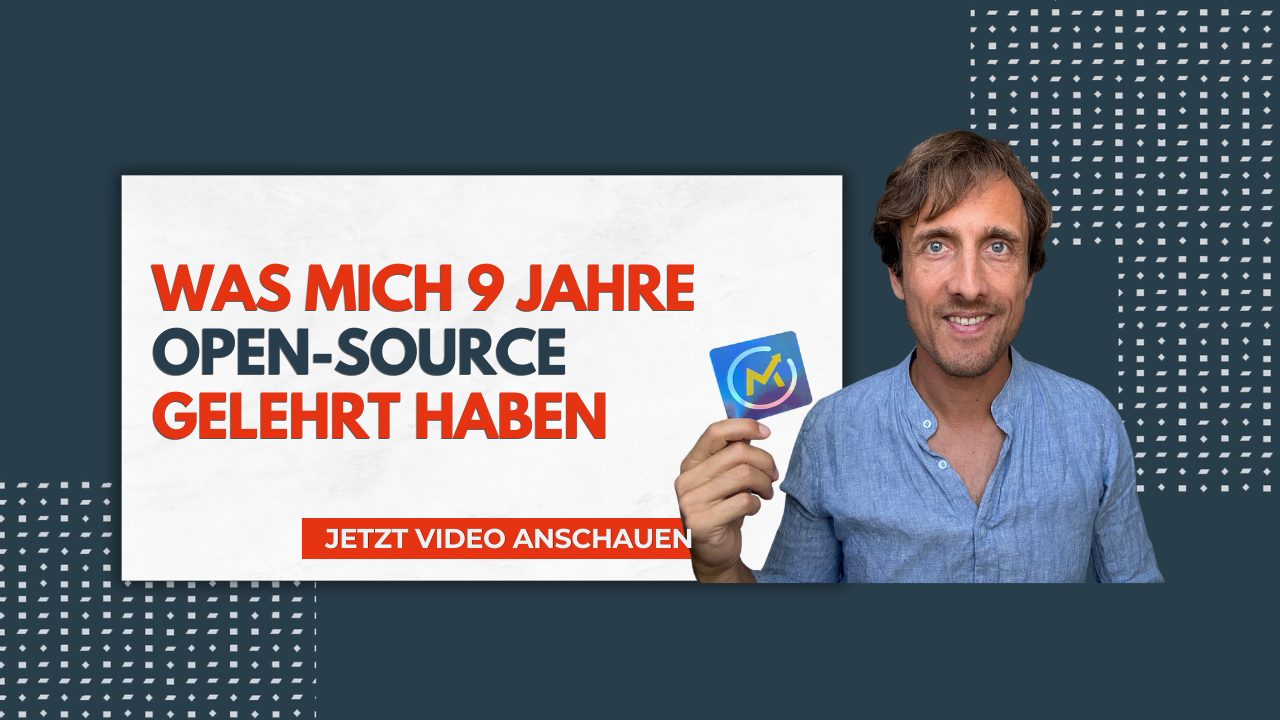
That’s why we give back: a new email builder, ongoing improvements to Mautic, currently the Head of Product, and our special Aivie plug-ins for the community—free of charge or for a small contribution to cover costs. In the end, everyone benefits, worldwide.
Lesson 5: Most of the time it doesn’t fail because of the tool. But sometimes it does
The vast majority of marketing automation projects don’t fail because of the tool, but because of everything around it: lack of time, unclear processes, content that never gets written, and the expectation that a tool replaces strategy. The tool is usually the easy part.
But sometimes it does fail because of the tool—in two ways. First, the costs: if the price rises disproportionately with every thousandth contact, every good idea eventually becomes too expensive.
Second, technical hurdles: a missing integration, a feature behind a paywall, a system you can’t cleanly get your data out of. That’s exactly why the choice of tool does matter. What counts are predictable costs instead of an invoice that punishes your growth, and open technology instead of a wall where your ideas stop.
Conclusion
Nine years, five lessons: Email marketing is more complicated than it looks. Data sovereignty has become a CEO-level topic. An honest price is one you understand. Open source is shared, not free. And in the end, it’s not the tool that decides, but the process behind it—unless the wrong tool gets in your way with costs and technical limits.
Would I do it the same way again? Yes, absolutely. Even again at night, alongside my job, with a broken first installation. Exactly like that. If you want to know what an open, sovereign setup looks like today, you’ll find an overview at aivie.ch.
Marketing Automation that simply works

Start immediately with the right use case package from Aivie
Whether it’s winning leads, building customer loyalty, or securely implementing data protection – with our preconfigured Use Case Packages, you can get your marketing automation up and running quickly and effectively. No lengthy onboarding. No detours. Choose a package, simply get started, and see results.
